There is a fabric from Mali that has been on the walls of the world’s most prestigious galleries for over a century.
Not displayed there. Reproduced there in the geometric abstractions of Henri Matisse, in the angular compositions of Pablo Picasso, in the bold pattern language of early 20th century Western modernism.
The fabric is called Bogolan. You may know it as mudcloth. And the story of how its visual language travelled from the Bambara people of Mali to the studios of Paris without a single acknowledgement is one of the clearest examples of cultural extraction in textile history.
What Bogolan actually is.
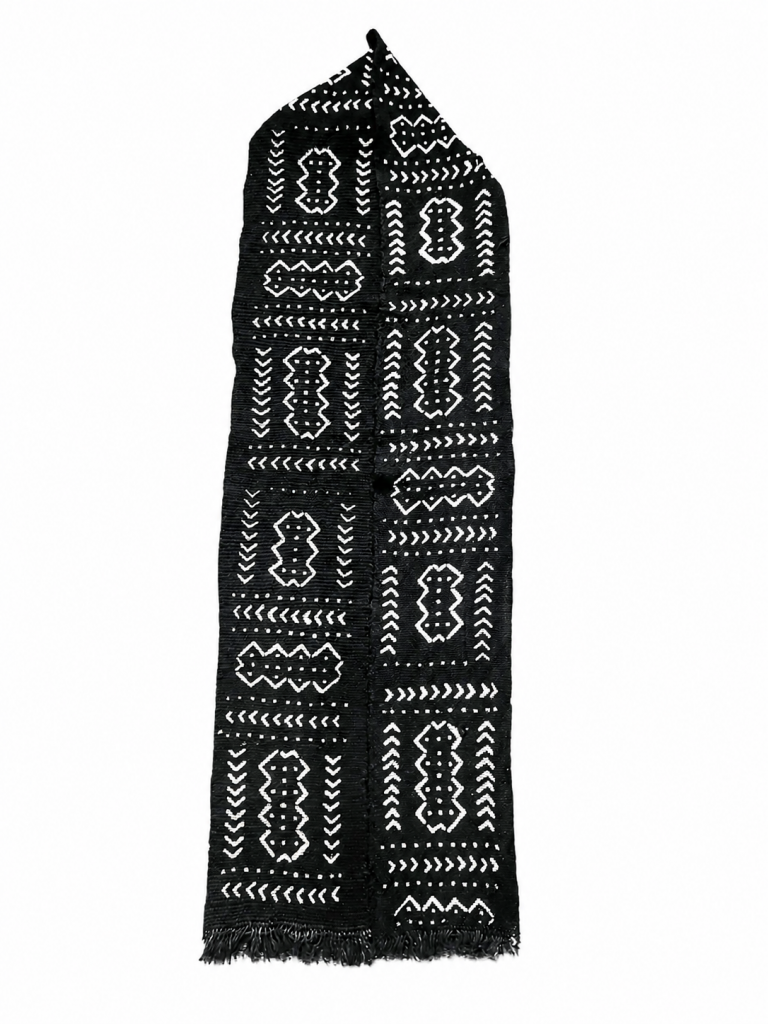
Bogolan is a handwoven cotton cloth made by the Bambara people of Mali. Its name comes from the Bambara language bogo meaning earth or mud, lan meaning with. Cloth made with mud. The production process is extraordinary. The cloth is soaked in a solution made from specific tree leaves containing tannins that react with iron in fermented mud. The mud collected from specific ponds, fermented for months is applied to the cloth in patterns using a flat blade. Dark brown or black marks appear wherever it touches. The undyed areas are bleached. The process is repeated, sometimes for weeks, until the pattern achieves its final depth.
The result: geometric patterns in cream or white against deep brown or black. Precise, bold, immediately striking.
What the patterns carry
Bogolan is not merely decorative. Specific geometric motifs are associated with specific Bambara cultural concepts courage, femininity, spiritual protection, community membership.
Young women receive Bogolan garments at life transitions coming of age ceremonies, marriage, the birth of a first child. Hunters wore specific patterns for spiritual protection. Warriors wore configurations that communicated their status and courage.
This is a functioning symbolic language, practised and maintained for centuries.
Paris, 1907 — and what was never said Picasso credited his encounter with African art at the Trocadéro in Paris in 1907 as transformative. Matisse engaged deeply with African pattern language throughout his career.
These influences have been documented by Western art historians.
What almost no one has documented is where those patterns actually came from. Who made them. What they meant. What they were for.
The Bambara people of Mali are almost never named in the wall text beside a Matisse.
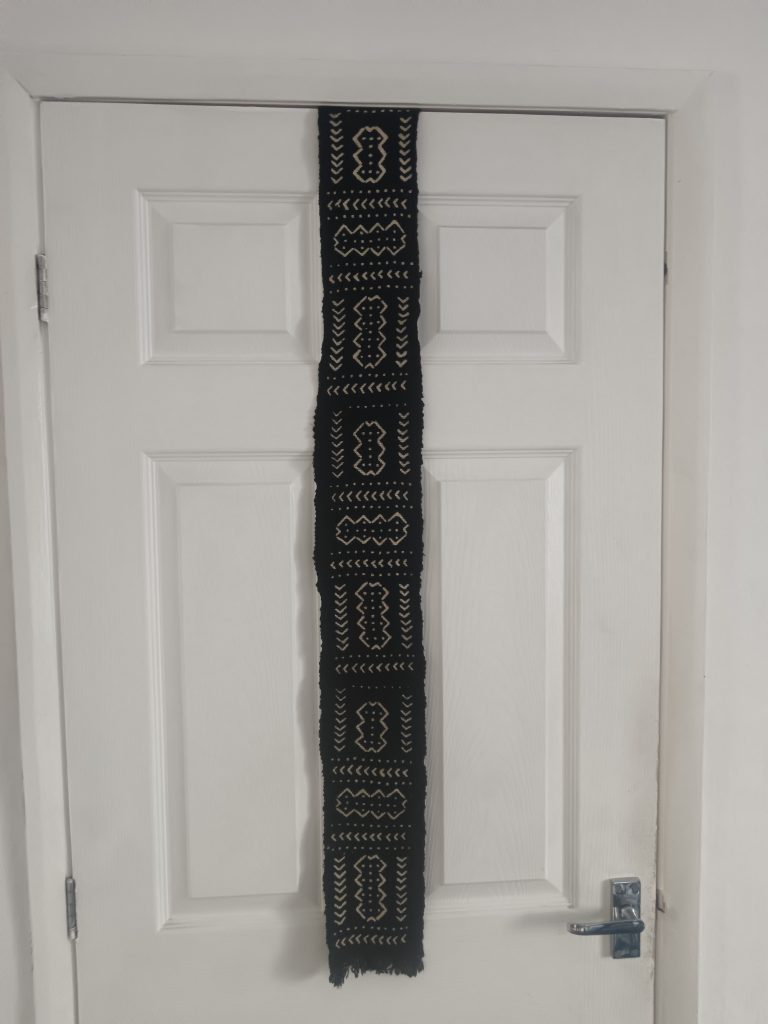
Today, Bogolan patterns appear in interior design collections, fashion ranges, and homeware catalogues across the Western world. Sometimes described as tribal print. Sometimes mudcloth. Almost never as Bogolan. Almost never with any reference to the Bambara people who created this visual language.
At Ann-Aniedi Asikpo Studio, this is the invisibility we work to reverse.
The name is Bogolan. It comes from Mali. It belongs to the Bambara people. It carries a symbolic language that predates by centuries any Western modernist movement that borrowed from it.
That is the full sentence. It deserves to be said in full.
#Bogolan #Mudcloth #BambaraCulture #MaliHeritage #DecodeAfrica #CulturalCredit #weaveyourstory