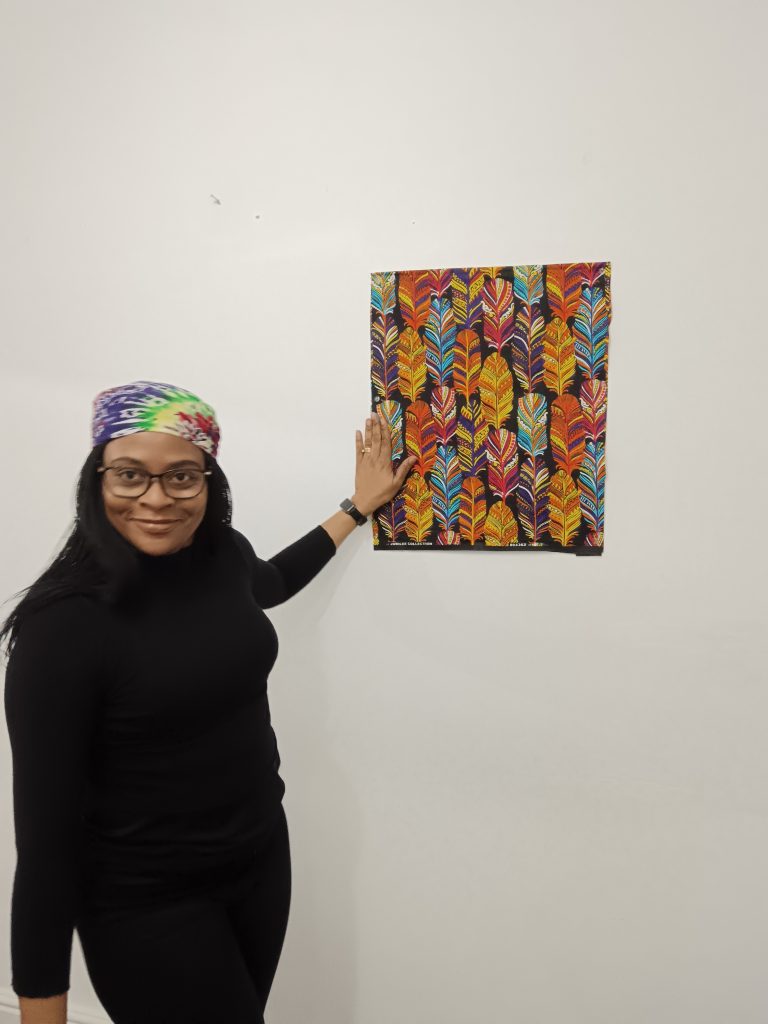
How Egba women of Abeokuta transformed , created indigo, cotton, using natural resources into one of Africa’s most sophisticated textile traditions.

Exhibition Piece 01
Adire: Indigo memory
This is handcrafted using Yoruba-inspired Adire traditions. this is created for the forthcoming DECODE Africa Exhibition exploring African textile heritage traditions through contemporary design.
When contemporary conversations shift to fashion innovation, the highlight practically always lands on modern technology, artificial intelligence, smart fabrics, digital design, and high-tech laboratories. .However long before these ideas existed, women in Abeokuta, Nigeria, were performing complex chemical experiments every single day.
Their laboratory was the dye yard. Their hands were use as tools , they built their knowledge on keen observation. Their creation was Adire.
If you have ever been around fresh Adire, you know it has a distinct smell—earthy, sharp, and unmistakably very much alive. That scent tells you that there is fermentation in action: the evidence of a sophisticated chemical process taking place can not be denied. This is part of fashion history is rarely discussed: Adire is not simply a beautiful fabric; it is science that is preserved in cloth.
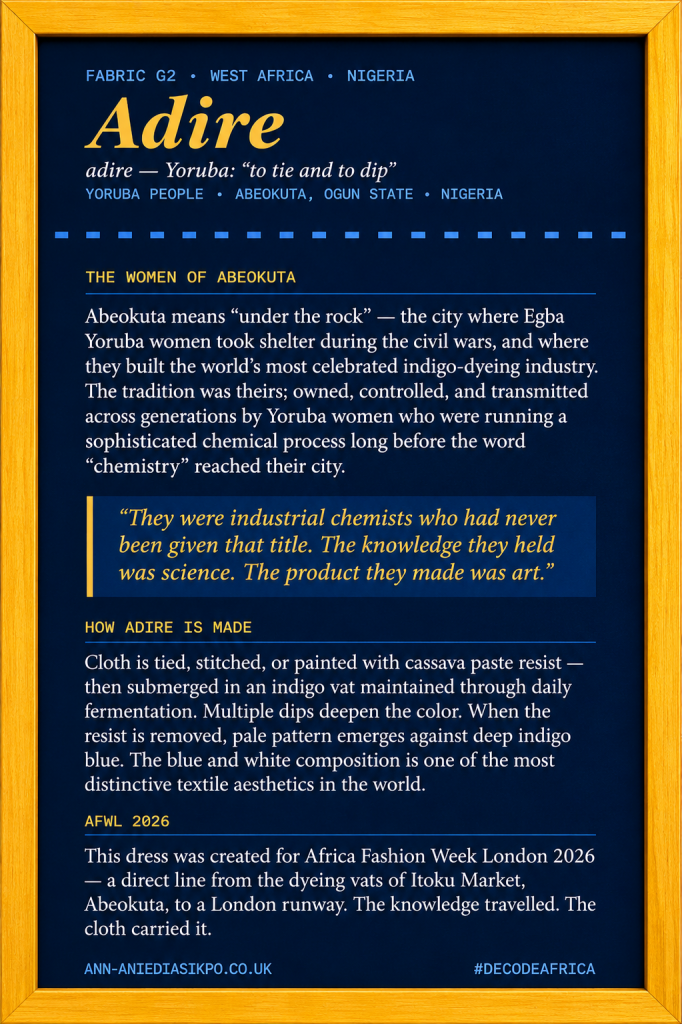
Abeokuta: The City Beneath the Rock
The name Abeokuta means “under the rock.” Historically, the Egba people found refuge beneath Olumo Rock during periods of conflict. From that secure foundation, the women built thriving communities, commerce, and creative industries—none more important than textile production.
Adire became a powerful medium for Yoruba artistic expression, but the women behind it were far more than artisans. They were pioneering innovators.

Exhibition Piece 02
Adire: Indigo Memory
Handcrafted using Yoruba-inspired Adire traditions. This is created for the forthcoming DECODE Africa Exhibition exploring African textile heritage tradition through contemporary design.
Understanding the Chemistry of Indigo
Indigo is among the oldest natural dyes known to humanity, but changing raw plant matter into deep blue fabric is far from simple. Indigo dye is insoluble in water. To bond with cotton fibers, it must first undergo a fragile process of chemical reduction accomplished through organic fermentation.
Plant Matter + Alkaline Solution + Fermentation ➜ Soluble Leuco-Indigo (Dyeing Bath)
The women who handle the indigo vats held a deep, empirical understanding of this chemistry:
- Vat Health: They could diagnose the state of a dye vat simply by minor, smell, and touch.
- Environmental Balance: The women specifically controlled the variables—plant ratios, wood ash alkalinity, temperature, and fermentation time.
- Fixation: They understood how oxidation transforms the hidden, soluble yellow-green dye into a permanent, vibrant blue on exposure to air.
This was not trial and error; it was applied scientific methodology passed down from one generation to another .
The Women Behind the Blue
Oral history credits much of the institutionalization of Adire cloth-making in Abeokuta to Chief Mrs. Miniya Jojolola Soetan, the second Iyalode of Egbaland.
Her legacy represents generations of African women whose technical mastery was preserved across community practice rather than formal academic writing. Their innovations survive because their societies recognized their immense technical and economic value.
“As I document Adire through DECODE Africa, I am not simply collecting textile samples. I am preserving knowledge, recording stories, and celebrating the women whose intelligence shaped African heritage.”

Exhibition Piece 01
Adire: Indigo Memory
Handcrafted using Yoruba-inspired Adire traditions. I created this for the forthcoming DECODE Africa Exhibition exploring African textile heritage through contemporary design.
Why does This Legacy Matters Today
The story of Adire carries critical lessons for the modern world:
- Innovation Isn’t Tied to Modern Labs: Groundbreaking discoveries happen everywhere in our lives , in homes, workshops, and traditional communities just as often as in corporate research facilities.
- Sustainability Is an Ancient Practice: S ustainability has been in existent decades before “circular fashion” became a buzzword, traditional artisans were operating zero-waste, plant-based, and natural dye systems in the case of Adire..
- Historical Gender Equity in STEM: Women have always been scientists and engineers; but historical narrative simply failed to apply those titles to their work.
There is always a story behind every Adire , every shade reflects a chemical reaction, and every piece of cloth carries the memory of brilliant women who mastered chemistry and created this textile traditions long before the world gave them credit for it.
“As I document Adire through the DECODE Archive, I am not simply preserving a textile. I am also documenting material integrity, protecting indigenous knowledge, and also ensuring that the women whose innovation shaped this extraordinary tradition receive the recognition they deserve.”
In DECODE Africa l design every garment as an exhibition piece, each collection combining fashion, research, cultural documentation, and public education to preserve Africa’s textile heritage for future generations.
About the Exhibition Collection
All garments used throughout this article form part of my developing exhibition collection. Each piece interprets an indigenous African textile tradition using contemporary design while preserving its cultural history, craftsmanship, and material integrity. The collection will be presented through future exhibitions, workshops, and educational programmes.
Join the Conversation
What traditional knowledge or indigenous technology from your culture do you think deserves greater recognition today? Let us know in the comments below!