The Architecture of Curation: Returning to the Stones of Durham Cathedral
By Ann-Aniedi Asikpo (MA, MCIPR)
Published: Thursday, 15 July 2026
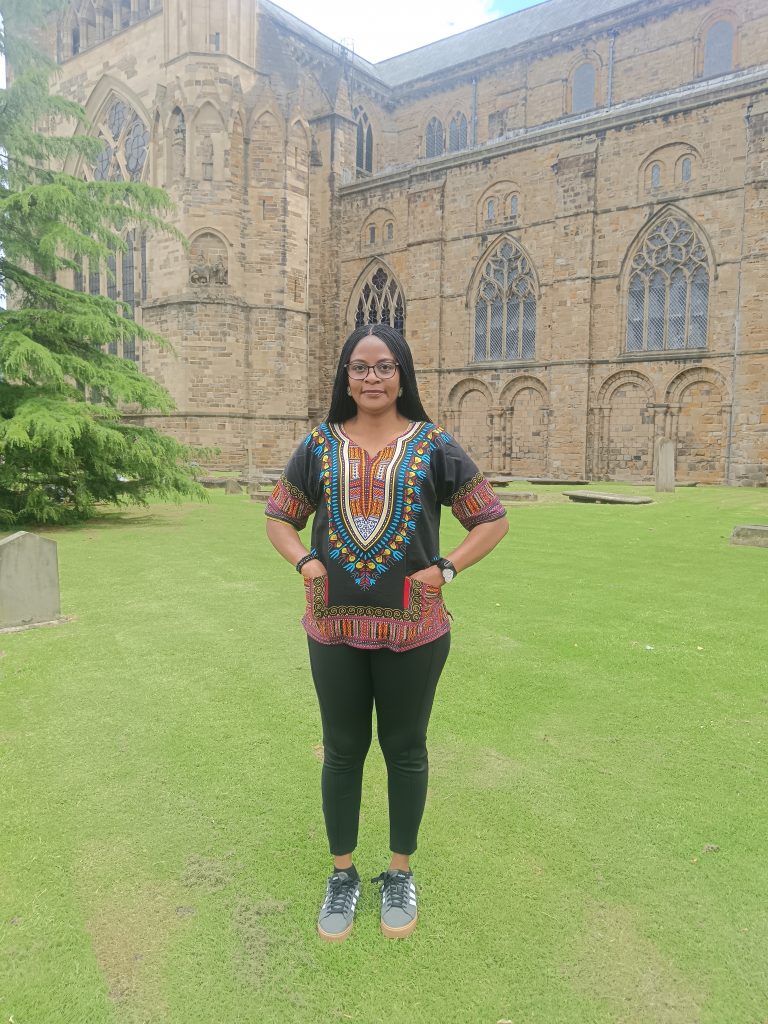
Last month, I stepped off the bus and walked back into the monumental stone nave of Durham Cathedral .
Entering that UNESCO World Heritage site instantly brought a profound wave of professional reflection flooding back. This was the exact physical landscape that defined my final-year Multimedia Public Relations project at Teesside University the site where I spent months analyzing algorithmic demographics, building zero-budget digital media frameworks, and researching how historic legacy communicates with a modern public .
However, last Wednesday, I did not walk through those doors as a postgraduate student. I returned as a Creative Director, a CIPR Member, and a Cultural Archivist executing critical B2B field research for Ann-Aniedi Asikpo Studio .
My primary strategic mission was to complete an institutional curation audit of the cathedral floor and study how national heritage sites frame permanence and historical data communication .
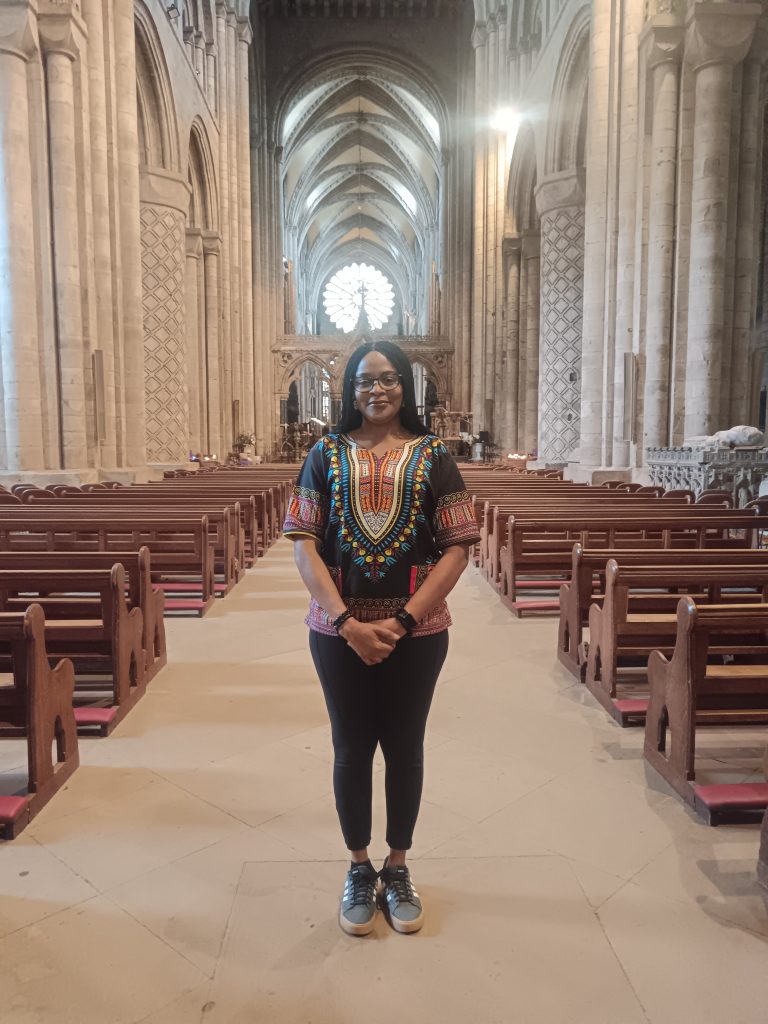
The Semiotics of the Stone: A Curatorial Audit
As an independent founder currently designing the physical display layouts for our studio’s textile exhibitions, walking through Durham Cathedral is a masterclass in spatial communication . I bypass the standard visitor path to focus entirely on the operational mechanics of the space :
- Textual Balance: I meticulously studied their printed text boards and information stands. The cathedral team beautifully balances dense, heavy, theological and architectural history with simple, scannable, and universally accessible English prose.
- Visual Integration: I mapped out how the curation team subtly mounts temporary signage and multimedia frameworks directly adjacent to centuries-old Norman columns without disrupting the structural sanctity of the architecture .
- Audience Movement: I analyzed how text blocks and physical information layout pathways are positioned to naturally guide the foot traffic and focus of younger, hard-to-reach demographics.
In the public relations and heritage sectors, this is not passive looking this is highly technical data collection . These spatial templates are precisely the structural models we are adapting to format our own A3 and A4 Curatorial Story Panels for upcoming UK gallery and library exhibitions .
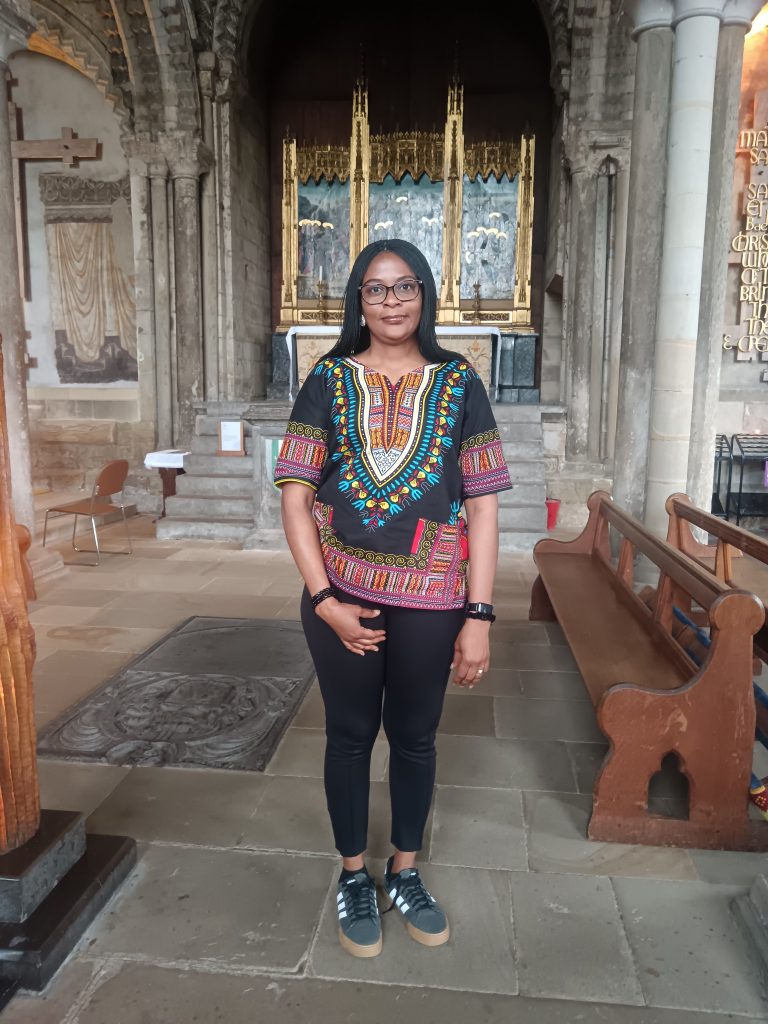
Material Integrity and the Timeline of Legacy
Standing in the Galilee Chapel, the true alignment between Durham’s architecture and our studio’s mission became entirely clear.
Durham Cathedral has withstood nearly a thousand years of political restructuring, regional isolation, and intense physical conservation. The curators and administrators who manage this space understand a fundamental law of heritage: protecting an archive requires absolute discipline, empirical documentation, and unwavering long-term vision.
This is exactly the level of institutional precision we are introducing to West African material culture .
Traditional textiles like Ankara, Adire, and Aso-oke are not temporary, disposable fashion items . They are active, highly sophisticated historical records and visual systems of literacy that have survived oceanic migrations, industrial shifts, and multiple generations . They carry communal proverbs, economic history, and social status woven directly into their threads .
Our textiles deserve the exact same structural conservation, material integrity tracking, and institutional reverence that the United Kingdom grants to its stone cathedrals .
Returning to Durham did not just remind me of where my university research began. It provided the exact architectural blueprint for where our studio’s archiving journey is going next.