Examining how coordinated textiles are used express identity, family, community and cultural connection.
When you walk into a Nigerian wedding , one of the first things you may notice is the fabric.
Before the music begins, before conversations start and before you meet the families, the clothing will tell you everything.
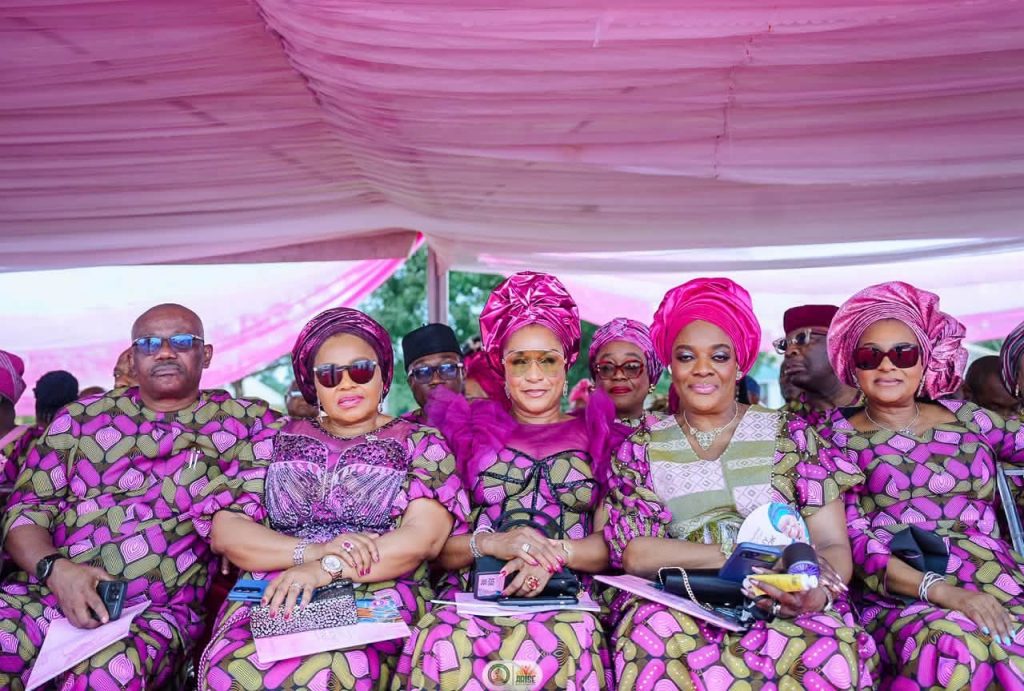
You will always noticed group of women dressed in the same colour, wearing coordinated fabrics and carefully styled headwraps. Some other group may be wearing a different fabric altogether.
Where ever you are from across the room, you begin to understand that:
These people belong together.
This is one of the most fascinating things about Aso-Ebi.
It Is More Than Matching Clothes
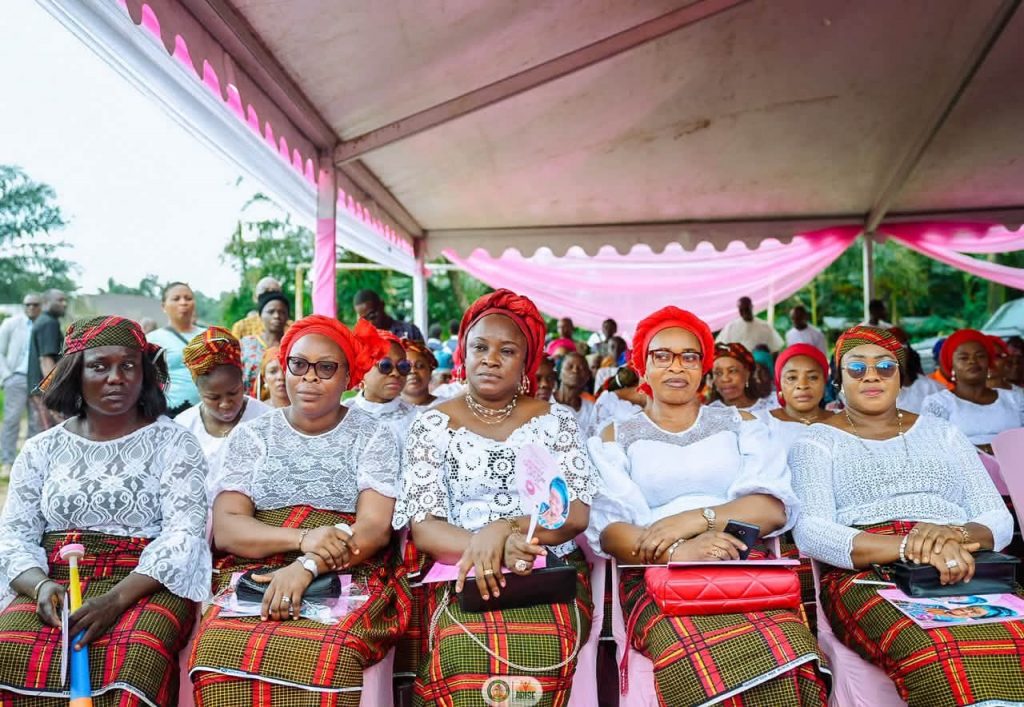
In Nigeria, Aso-Ebi is often understood simply as coordinated clothing worn for celebrations. But reality it represents much more than fashion coordination.
This practice has been strongly associated with Yoruba social and ceremonial culture and has become an important feature of Nigerian celebrations in general.
Aso-Ebi can be used as a means of communicating:
I belong to this family.
I am part of this celebration.
I stand with these people.
I am connected to this moment.
The fabric used becomes a visual language.
It creates room for relationships and social connections to become visible.
When Fabric Becomes a Statement of Belonging
The interesting thing for me about Aso-Ebi is the way fabric can function as a form of social identity.
We often think of belonging as something passionate or invisible.
We belong to a family.
We belong to a community.
We belong to a culture.
With the use of Aso-Ebi, belonging becomes something that can be seen and worn.
You purchase the fabric.
You have it made into a garment.
You wear it to the celebration.
And suddenly, your relationship to that community becomes visually recognisable.
This is a good reminder that textiles can communicate far more than colour, pattern and beauty.
They can also communicate relationships, identity and memory.
A Nigerian Tradition That Continues to Evolve
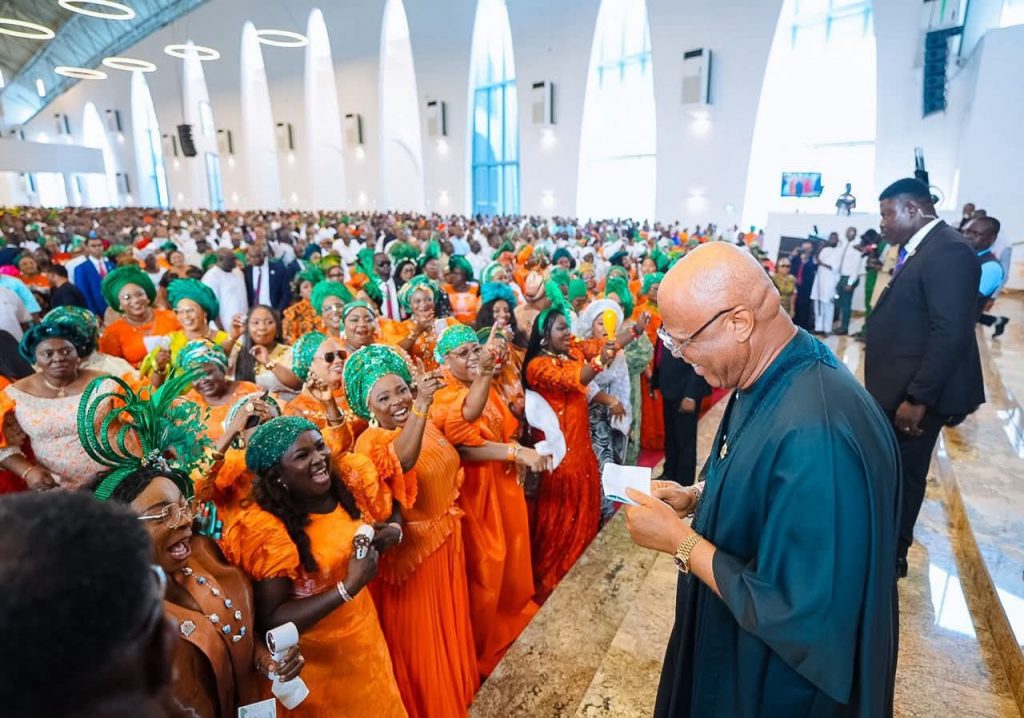
Although Aso-Ebi has deep roots in Yoruba social culture, its contemporary expression can be seen across all parts of Nigerian social life.
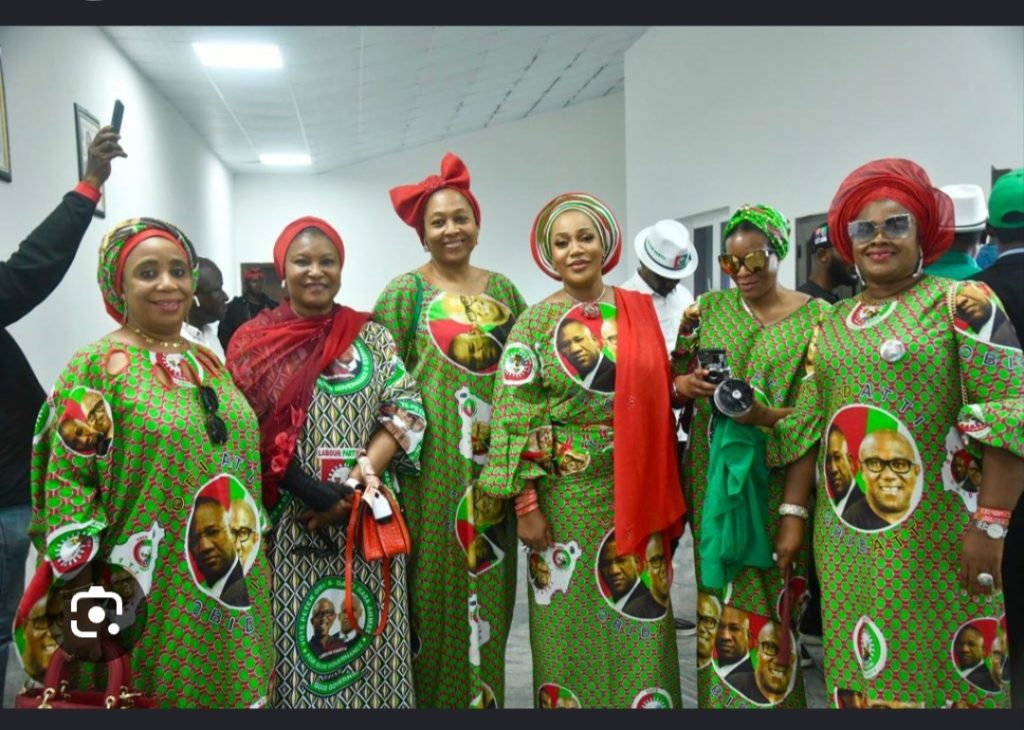
From weddings and naming ceremonies to church celebrations, funerals, community gatherings ,political gatherings and other major occasions, coordinated dress continues to play an important role in how Nigerians express togetherness.
The fabrics may change.
The colours may change.
The styles may change.
But the message remains the same and powerful:
We are together.
This development is important.
When we talk of cultural preservation, is not always preserved by keeping it exactly as it was.
Oftentimes culture survives because communities carry it forward, adapt it and give it meaning for it to thrive in new environments.
Aso-Ebi and the Nigerian Diaspora
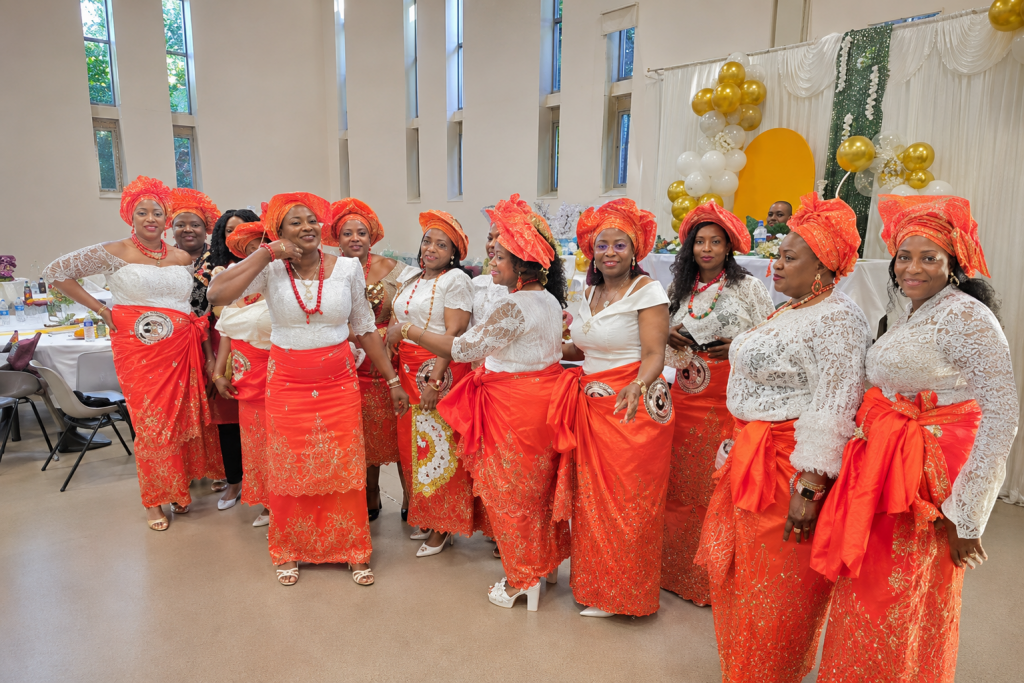
The meaning of Aso-Ebi becomes particularly interesting within the Nigerian diaspora.
Nigerian celebration in London, Manchester, Middlesbrough or New York may take place thousands of miles from Nigeria.
Even so ,the moment guests arrive wearing familiar fabrics, colours and styles, something recognisable happens.
Culture enters the room.
For many people living outside Nigeria, these visual traditions can create a powerful sense of connection to home.
This fabric travels across borders.
Just as the celebration travels across generations.
This is often accompanied by the feeling of belonging that travels with it.
This is why documenting African textile traditions matters.
African textiles are not simply materials with vibrant colours.
They can become records of people, places, relationships and cultural memory.
What Does Fabric Communicate?
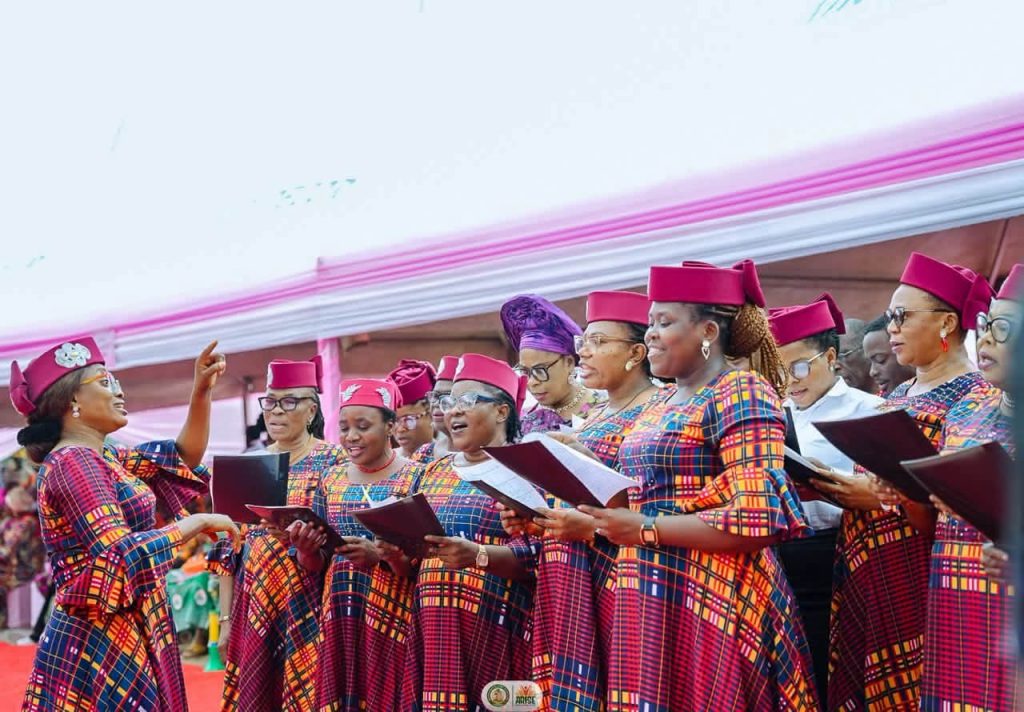
At Ann-Aniedi Asikpo Studio, this is one of the questions behind our work with African heritage textiles.
We are interested in looking beyond the surface of a textile while discovering the hidden communications and meaning .
What does the fabric tell us?
Where did it come from?
Who made it?
How has it been used?
What meanings have communities attached to it?
And how can those stories be documented responsibly and preserve for future generations?
Aso-Ebi offers a powerful example of how material culture can communicate without words.
For example ,when someone walks into a room wearing a particular fabric, and those who understand the cultural language can immediately begin to read the story.
Belonging You Can Wear

Perhaps that is what makes Aso-Ebi so powerful.
This turns belonging into something visible.
It create room for people to say:
I am here.
I am connected.
I am part of this.
Maybe this is one of the most important lessons African textile traditions can teach us about fashion.
Fashion is not always simply about what looks beautiful.
Sometimes it tells us who we are, where we come from and who we stand with.
The most powerful things fabric communicates are not always about beauty its is much more than that.
Sometimes, they are about who we are to each other.
Join the conversation
What does Aso-Ebi mean to you?
Do you see it mostly as fashion, cultural identity, community, family or a combination of all four?
For Nigerians living outside Nigeria, has wearing Aso-Ebi ever made you feel more connected to home?
Share your thoughts in the comments.