Some fabrics tell us something about fashion.
And then some fabrics tell us something about migration, cultural exchange, identity and history.
Shwe Shwe is one of those fabrics.
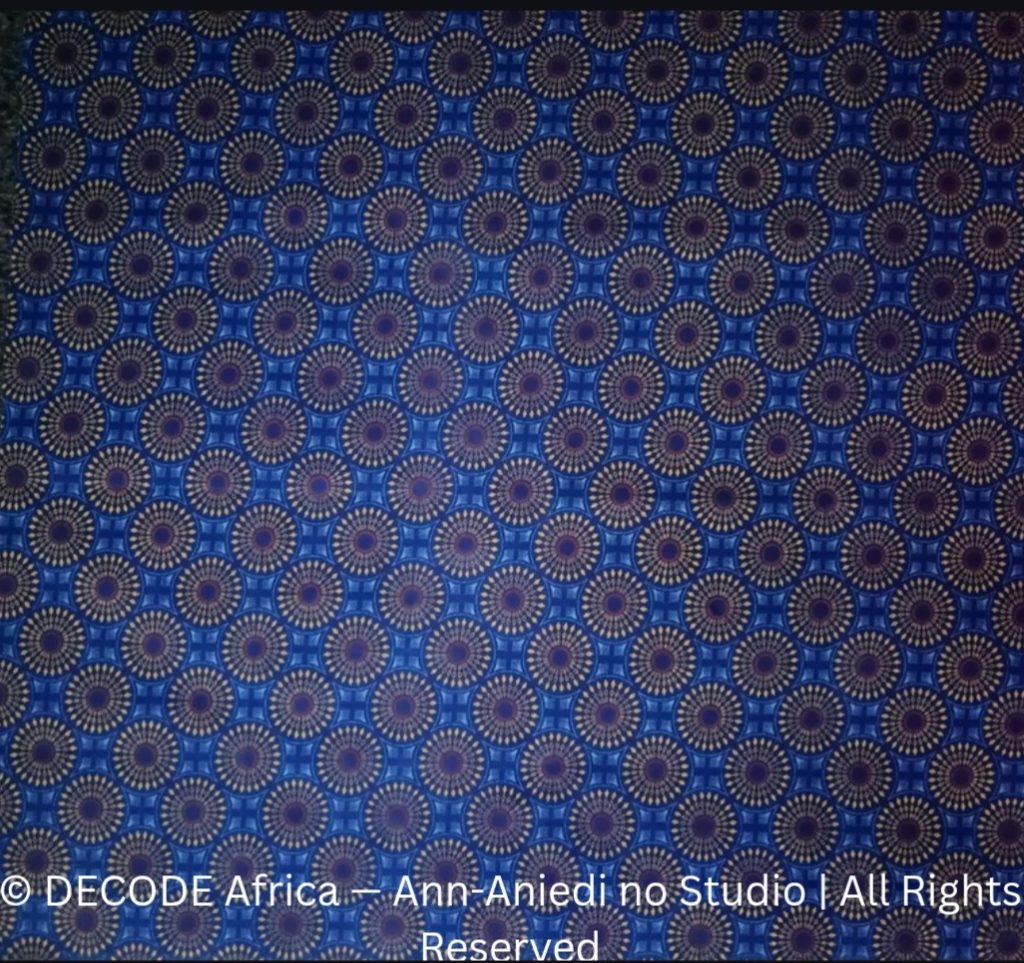
This Fabric is often described as ‘’the denim of South Africa’’.Shweshwe which is an indigo-dyed, release-printed cotton textile recognise for its complex patterns and strong Shweshwe is an indigo-dyed, discharge-printed cotton textile recognised for its intricate patterns and strong association with Southern African dress and identity. Today this fabric is available in blue and brown, red and a variety of other colours.
Although its story did not start in South Africa.
A textile with a much longer journey
The history of Shweshwe is seen as part of a much larger history of textiles moving across continents.
The Iziko Museum interpret the story of isiShweshwe as one that involves intercontinental trade and cultural exchange and origins connected to indigo textiles from the East and the European development and adaptation of printed cottons.
This is a fascinating history of Shweshwe.
This stresses the fact that textiles travel
They travel through migration, missionary activities and changing systems of production.
But this story doesn’t end when a textile arrives somewhere new.
Shweshwe connection to King Moshoeshoe I
It is the best-known account that connects the name Shweshwe with King Moshoeshoe I of Lesotho.
According to the French missionaries’ account, presented it presented the king with indigo-printed cloth in the 1840’s. The king’s association with this cloth made it much more popular, and the name became associated with him.
It is important to acknowledge that the origin of the name is debated.
According to Iziko Museums, who recorded another explanation: that the name may be onomatopoeic, referring to the sound of the fabric as it moves when worn.
This kind of detail, it makes textile history much more interesting.
Sometimes there isn’t one simple story.
There are competing accounts, memories and meaning.
Why “sejeremane”?
Shweshwe is also known by other names.
Sejeremane is one of the other names associated with the German connection, while ujamani is used in isiXhosa. These names reflect the history of the presence of both German and Swiss settlers and the adoption of European blue-print textiles in Southern Africa.
This fabric carries evidence of several histories at once.
European manufacturing.
African adoption.
Missionary encounters.
Trade.
Local dress.
And most importantly, cultural identity.
From imported cloth to cultural identity
I am so interested in this part of the Shweshwe story.
A textile can enter a community from somewhere else and still become deeply embedded in the identity of the people who adopt it.
Bit by bit, Shweshwe became associated with Southern African clothing and ceremonial dress and was adopted across different communities. These patterns, colours and uses became part of the visual language over which people expressed identity and belonging.
This thinking challenges the simplistic way of thinking about cultural exchange.
It is not always:
“This came from somewhere else, therefore it doesn’t belong here.”
Culture is often more complicated than we thought.
Communities adapt, reinterpret, assign meaning and make the fabric their own.
Shweshwe today
Today this textile has also developed into a contemporary fashion material.
Da Gama Textiles describes itself as the home of Three Cats Original Shweshwe, continuing traditional manufacturing in South Africa. The company says its Shweshwe is printed on 100% cotton using traditional processes.
Shweshwe has therefore travelled another distance:
Moving from textile trade → to cultural adoption → to identity → to contemporary fashion.
This journey is worth paying attention to.
Why I keep returning to textiles
For me, textiles are never simply fabrics. They also communicate
They can be records of movement.
Records of encounter.
Records of creativity.
Records of adaptation.
And records of memory.
Shweshwe demonstrates how complicated that history can be.
Textiles can arrive through international networks and eventually become deeply associated with the cultural identity of the communities that adopted and transformed them.
I believe African textile heritage deserves to be studied not just because of its fashion through history, material culture, migration, trade and cultural identity.
And maybe the most interesting question isn’t always:
“Where did this fabric originate?”
We should also ask:
“What happened to it when it arrived?”
This question altogether opens new ways of looking at textile heritage.
A note on the history
The history of Shweshwe origins contains different accounts naming and routes into Southern Africa. I have intentionally kept this article as an introduction rather than attempting to resolve those debates. If you are interested in going deeper, you can go through the work of Iziko Museums of South Africa and the Smithsonian catalogue entry for Juliette Leeb-du Toit’s Isishweshwe: A History of the Indigenisation of Blueprint in Southern Africa, which provide useful starting points.