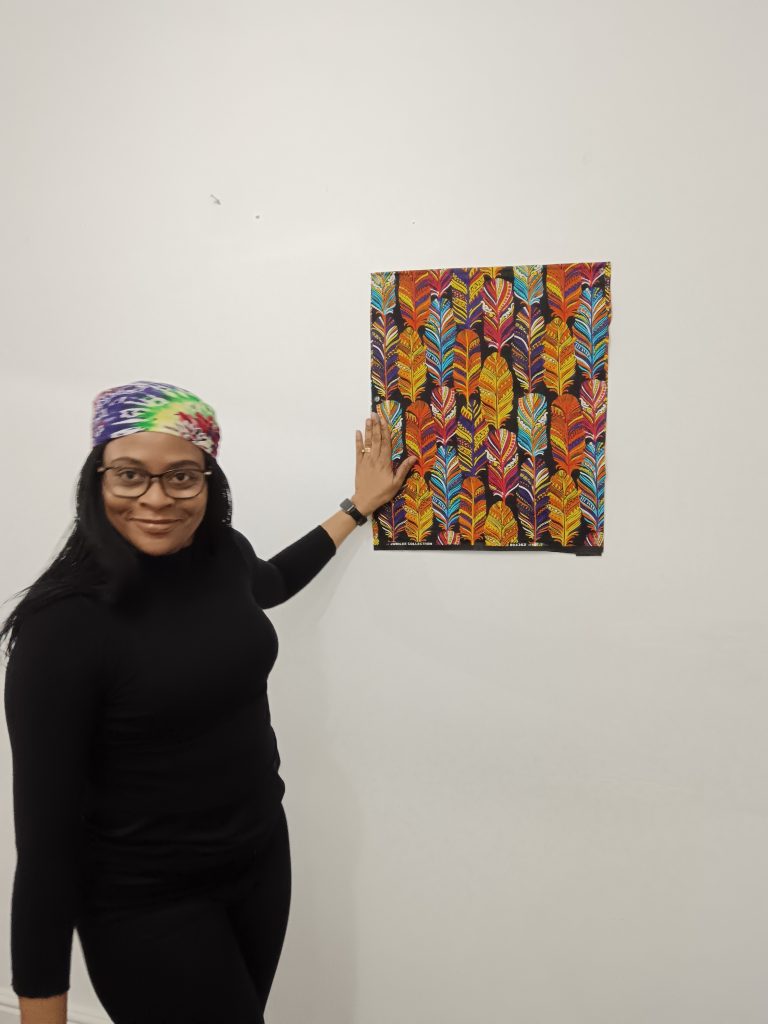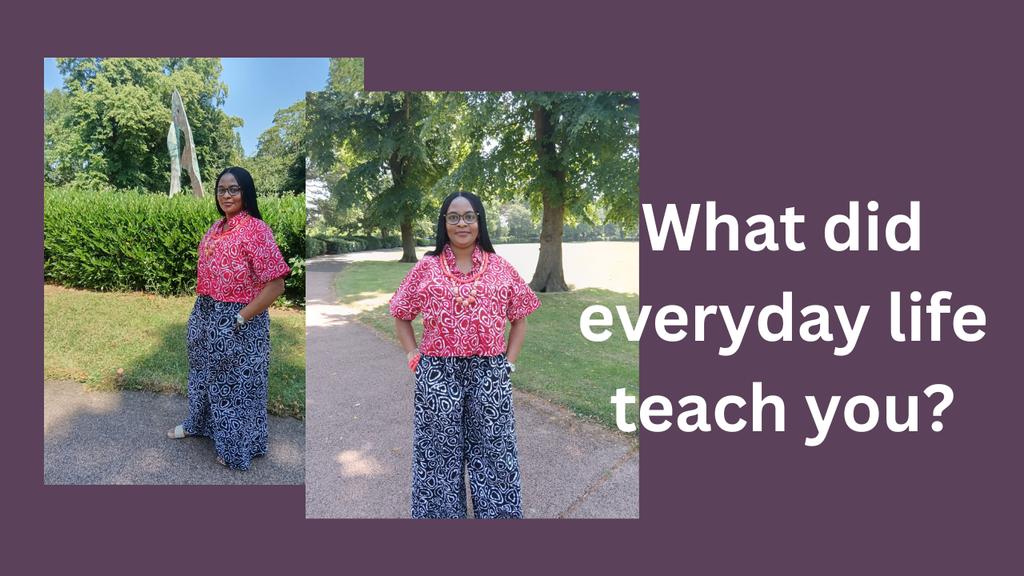
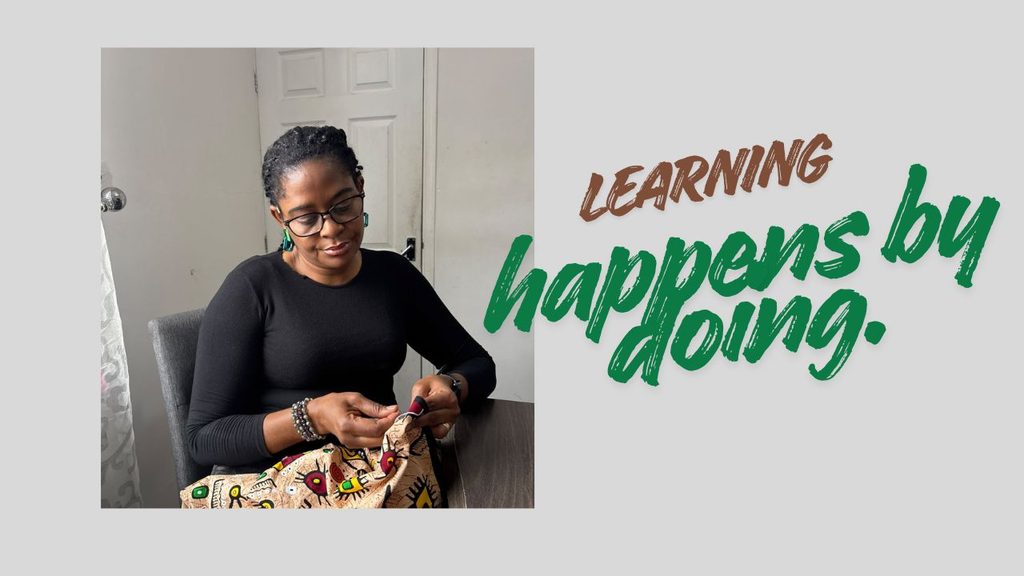
It is not everything you study in the classroom
Some things are learnt by simply just watching someone’s hand
You learn a lot by sitting beside your mother, auntie, grandmother, tailor and fabric seller.
Touching the cloth is also a lesson.
Making mistakes is a lesson.
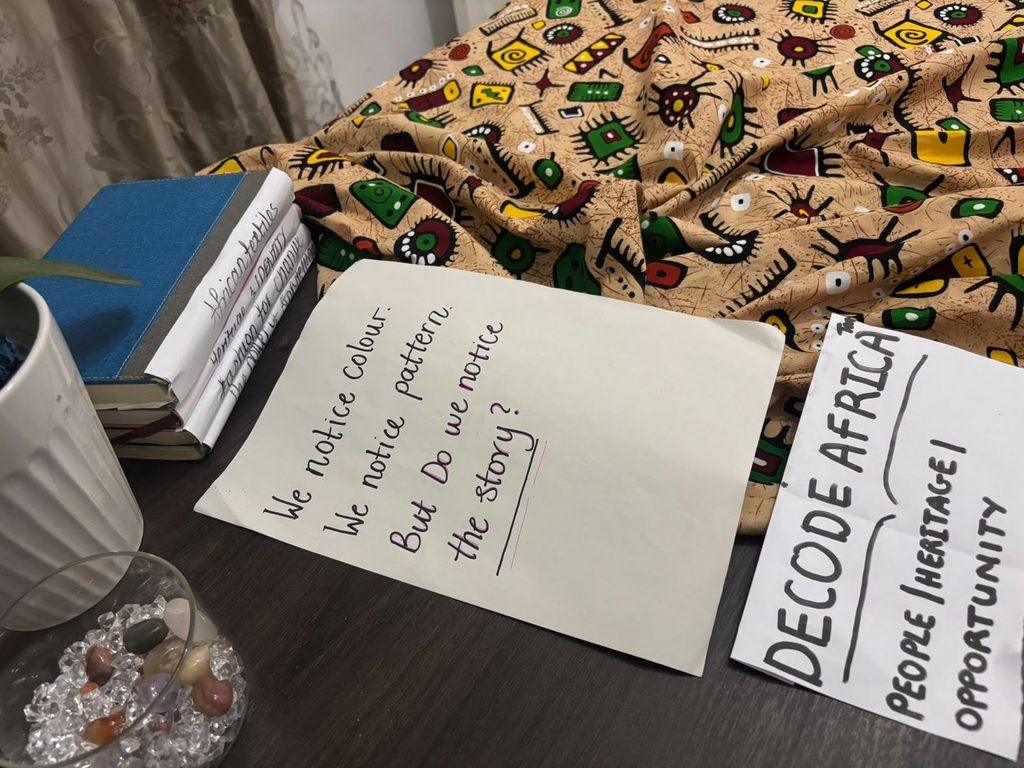
Being corrected is a lesson.
Asing questions is a big lesson.
This is the way I learn the most valuable things about African fabric.
These were not written down in any textbook. They have always been part of everyday life.
Let’s look at the ten.
1. Holding Ankara up to light before you buy it.
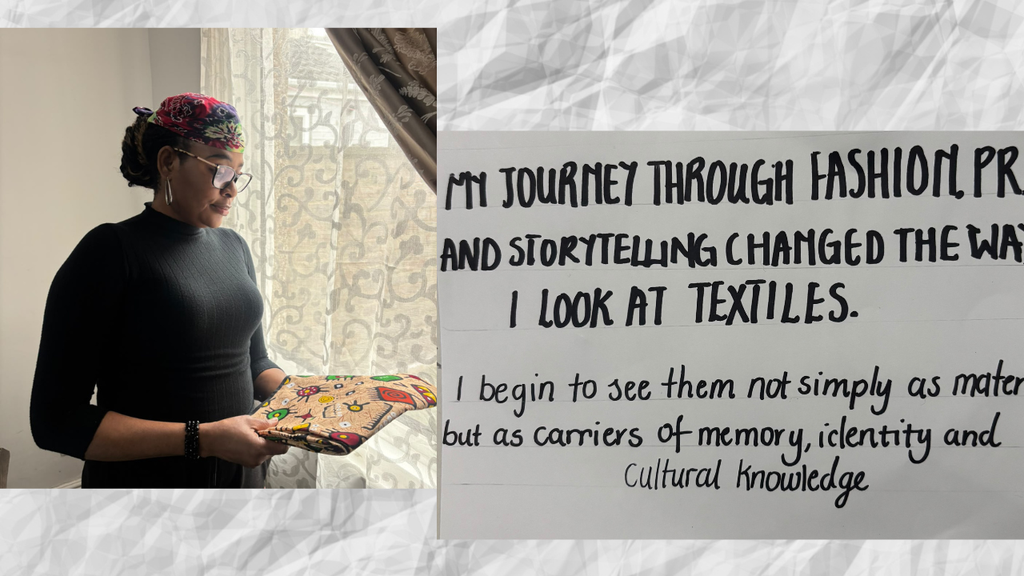
You will know things like fabric weight, density, and construction when you hold the fabric it to light, even before you consider the price.
This a simple hand every day’s habit, but it is also a form of knowledge. I
You learn to look beyond the printed design.
2. The pattern at the seam is important.
Matching a pattern across the seams is part of craftmanship especially in some garments.
We seem not to notice the work involve in a garment once the pattern flows across properly.
If not, it becomes noticeable to some who understand the fabric immediately.
High- quality constructed garment is often found in detail.
3. Not every fabric can be used for every occasion.
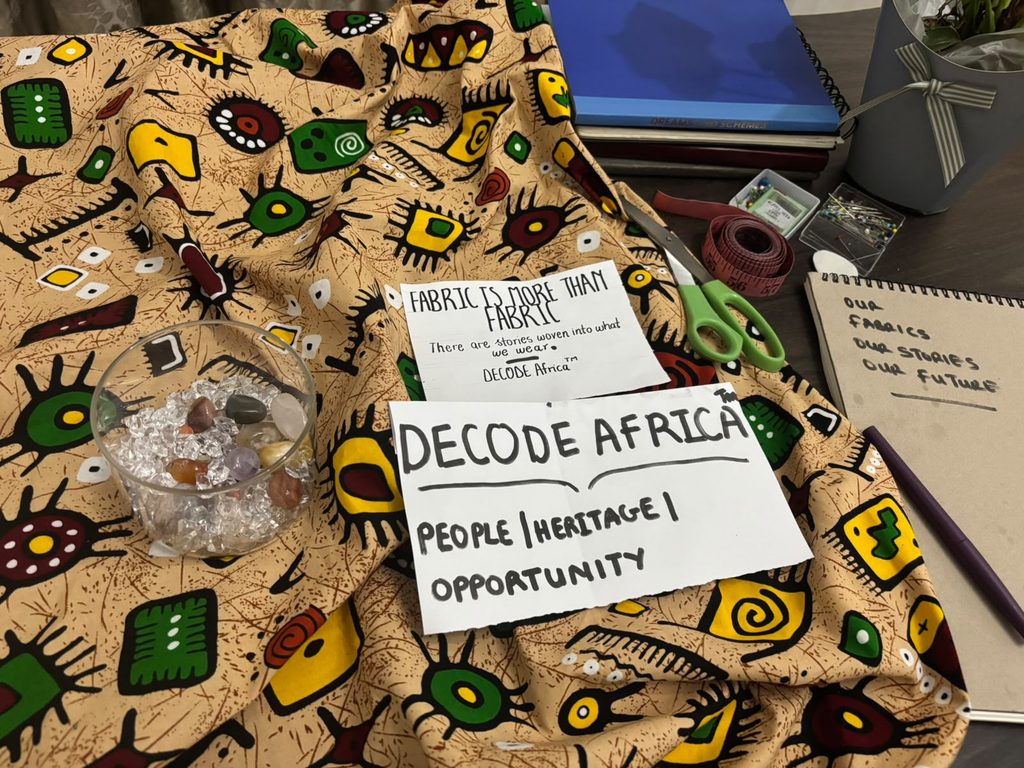
Each community has colours, patterns, textile and style may carry a lot of meaning especially in cases connected to ceremonies, celebrations, mourning, status or identity.
Most time this understanding is not documented anywhere.
You learn it while growing up.
We also learn as corrections from elders.
4. You can feel a good Aso-oke.
Aso-oke is not just a beautiful fabric; it is more than that.
HAND WOVEN ASO-OKE
You can tell how it is made as you feel the density of the hand-woven cloth.
You then understand that sometimes the hand can recognise something before the eyes does it
5. Adire carries traces of its making.
Adire is not simply a pattern printed onto cloth.

ADIRE
It carries the evidence of a process involving dye, resist techniques, human hands and time.
For people familiar with traditionally made textiles, even the characteristics of the finished cloth can become part of recognising and understanding it.
The making matters.
6. You learn how to fold your fabric.
There is a certain care involved in storing fabric.
You know which part of the pattern you want to see when the cloth is opened again.
Something as ordinary as folding becomes part of how we care for our possessions.
7. Some patterns carry cultural beliefs and associations.
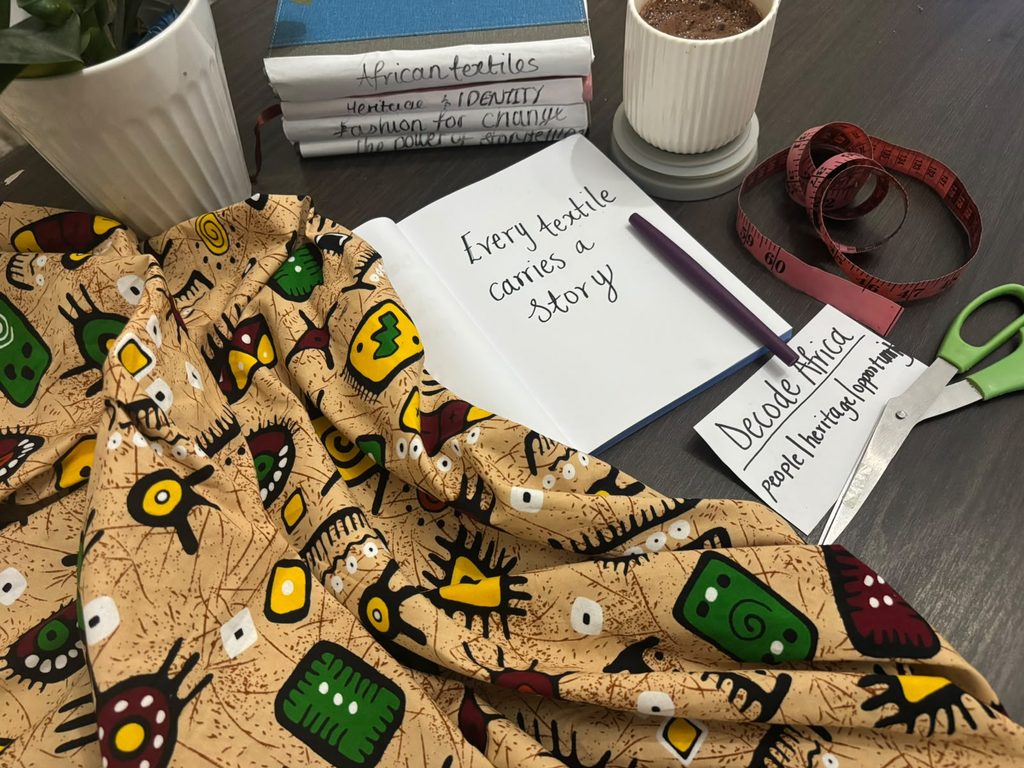
There are patterns and symbols that some communities associate with meanings or occasions.
Not every belief is universal.
Every community has its own interpretation for each pattern.
This is part of the cultural knowledge surrounding this textile and is always passed down verbally rather than formally documented.
8. Observe a good tailor before they cut any fabric.
An experienced tailor wouldn’t simply pick up a tape measure and start cutting.
They will take a close look at the fabric
They feel the fabric.
They consider the pattern, texture, structure and the behaviour of the fabric.
Those hands carry knowledge.
And most times you can learn good lessons by simply watching.
9. In some communities, the message can be part of the fabric.
A good example of how textiles can communicate is Kanga.
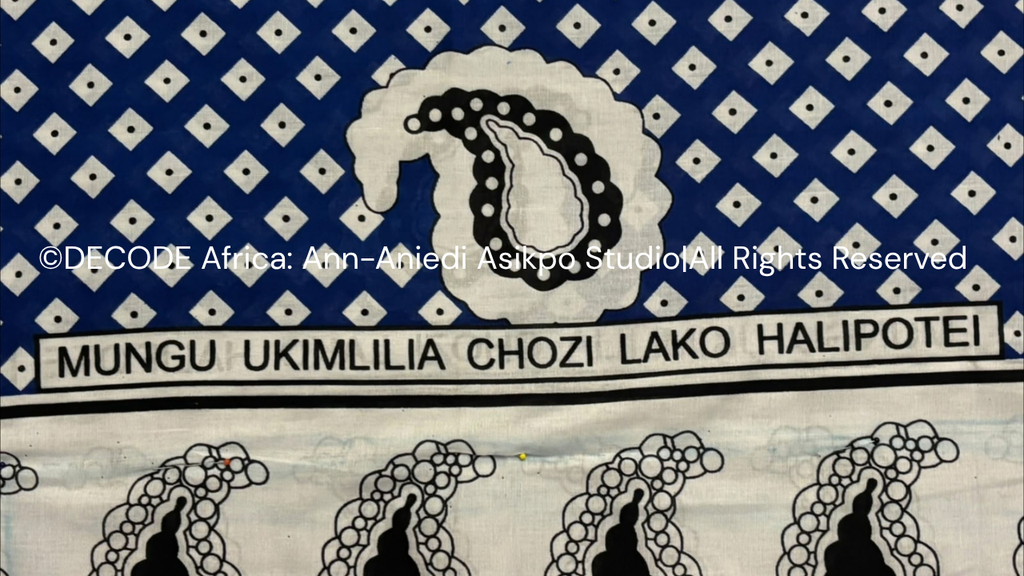
KANGA
This fabric can carry a proverb or message, turning something we wear into something that also speaks.
Textiles can also become part of our daily conversation.
10. Every piece of heritage fabric has passed through many hands.
The next time you hold a piece of African fabric, think about that.
Before it reached you, it passed through many hands. Through designers, dyers, weavers, printers, traders, tailors, sellers, or makers of these textiles.
When we look behind the fabric, we can see a sequence of human knowledge and labour.
This changes how you see it.
The lesson that no classroom taught me.
The knowledge I got made me think about heritage differently.
This shows that heritage isn’t only found in museums.
Heritage is not only found in archives.
And not only found in academic publications.
Sometimes you find it in ordinary knowledge passed from one person to another.
It can be found in the hands of the tailor.
It is in the knowledge of the fabric seller.
In the stories of the grandmother.
It can show up in the way someone folds a cloth.
It reflects in the reason someone chooses one pattern rather than another.
Recording that knowledge is important because they could be lost when the people who carry it are no longer here to teach it.
This sits at the heart of my work with DECODE Africa.
My interest is in how we can document, interpret and share African cultural heritage while respecting the communities and lived experiences from which that knowledge came.
Preservation is not simply about keeping an object.
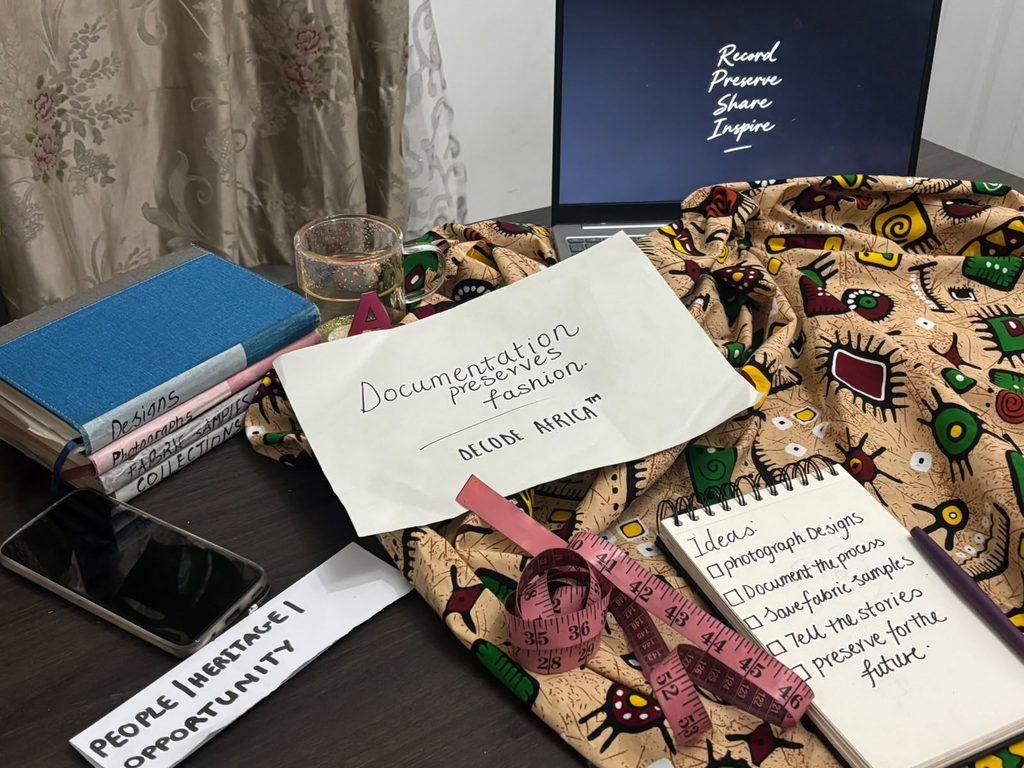
It is also about preserving the knowledge around the object.
And perhaps the next generation doesn’t need just to be told:
This is African heritage.
Perhaps we need to show them that knowledge of African Heritage matters.
What did you learn informally?
What is one thing about your culture, clothing, food, language, craft or heritage that you learned simply by watching and listening?
I’d love to hear it.
Sometimes the knowledge we need to preserve is the knowledge we already have without realising it.
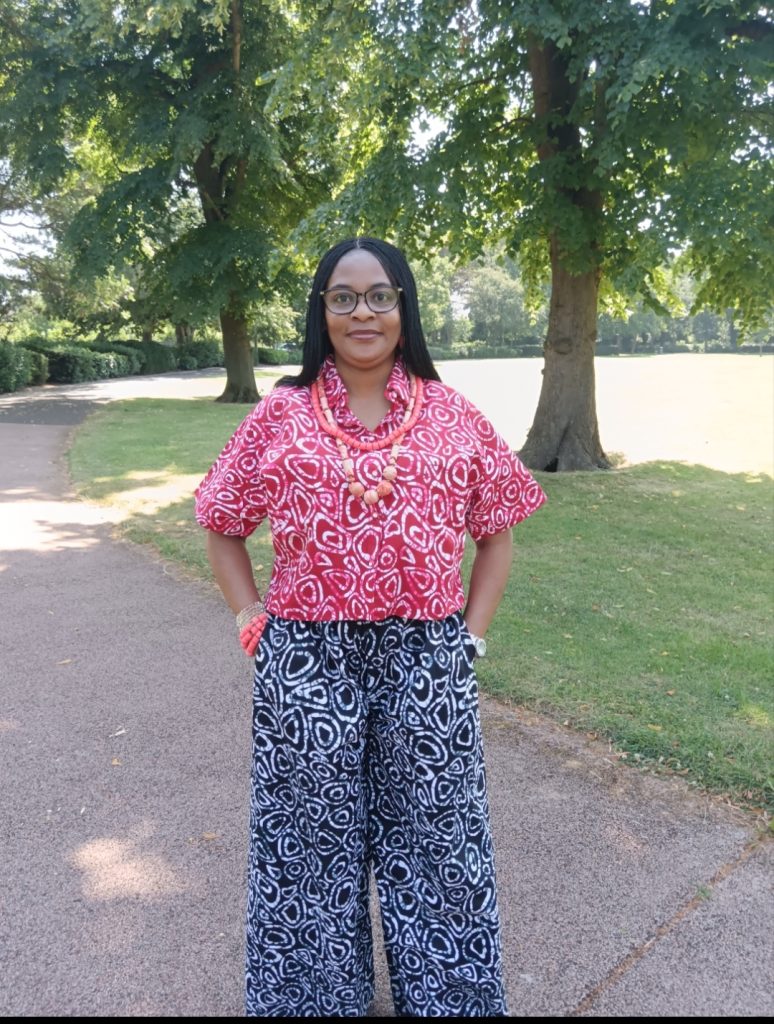
ANKARA CONTEMPORARY DRESS