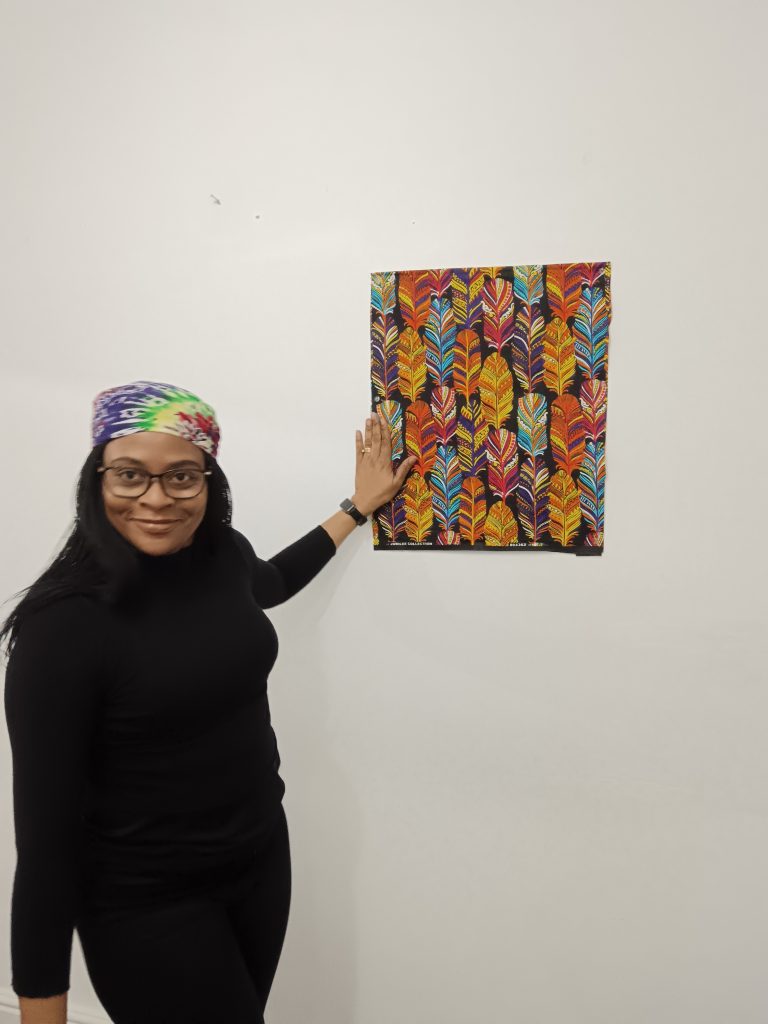
In almost every neighbourhood I grew up around in Nigeria, there was a tailor. Not a boutique. Not a fashion studio.
A tailor with a sewing machine near the market entrance who would take your worn garment and make it whole again.
They were not considered remarkable. They were considered essential.
And the difference between those two words is the whole argument of this post.
What repair culture actually is In the African textile communities I grew up around, repair was not a sustainability strategy. It was not a business model or a conscious consumer choice.
It was simply the relationship that people had with fabric.
An Ankara dress that developed a tear at the seam went to the tailor and came back whole. A blouse that grew too small was let out, adjusted, or transformed into something that fitted better. A length of fabric that had lived its full life as a garment was cut down and reborn as a child’s outfit, a headwrap, a market bag.
What is rarely discussed in Western conversations about repair culture is that the informal repair ecosystem that exists across African markets is an economy in itself.
Tailors earn livelihoods. Thread sellers, button traders, zip merchants — an entire supply chain of small vendors exists because fabric is maintained rather than discarded. In the UK, an estimated 300,000 tonnes of clothing go to landfill every year. The average garment is worn seven times before being discarded.
The tailors at the end of those Nigerian market streets would find both statistics genuinely difficult to comprehend. What the Craft of Use actually means The phrase Craft of Use describes the practice of wearing clothing more times, with more intention, across more years.
Research shows that extending the average garment’s wear by just nine additional occasions reduces its environmental impact by 20 to 30 percent.
At Ann-Aniedi Asikpo Studio, this is built into everything we make. Our #weaveyourstory movement asks a simple question: how many times have you worn your most loved African outfit?
The answer, in the communities I grew up in, was always a large number. And the garments themselves were evidence — softened by washing, shaped by wearing, carrying the record of every occasion they had attended. That is not sustainability strategy. That is how you treat something that carries meaning.
What we lose when we throw things away A piece of Ankara worn to your daughter’s naming ceremony and your mother’s funeral and your best friend’s wedding and your own milestone birthday is not just a garment. It is a record. An archive of your life, held in thread and pattern. When you throw that away, you do not just lose a piece of clothing. You lose a piece of testimony.
The tailors at the end of the street understood this without being able to articulate it. They were in the business of preserving testimony. That is the business I want Ann-Aniedi Asikpo Studio to be in too. #CraftOfUse #weaveyourstory #AfricanFashion #RepairCulture #DecodeAfrica #Ankara #CircularFashion