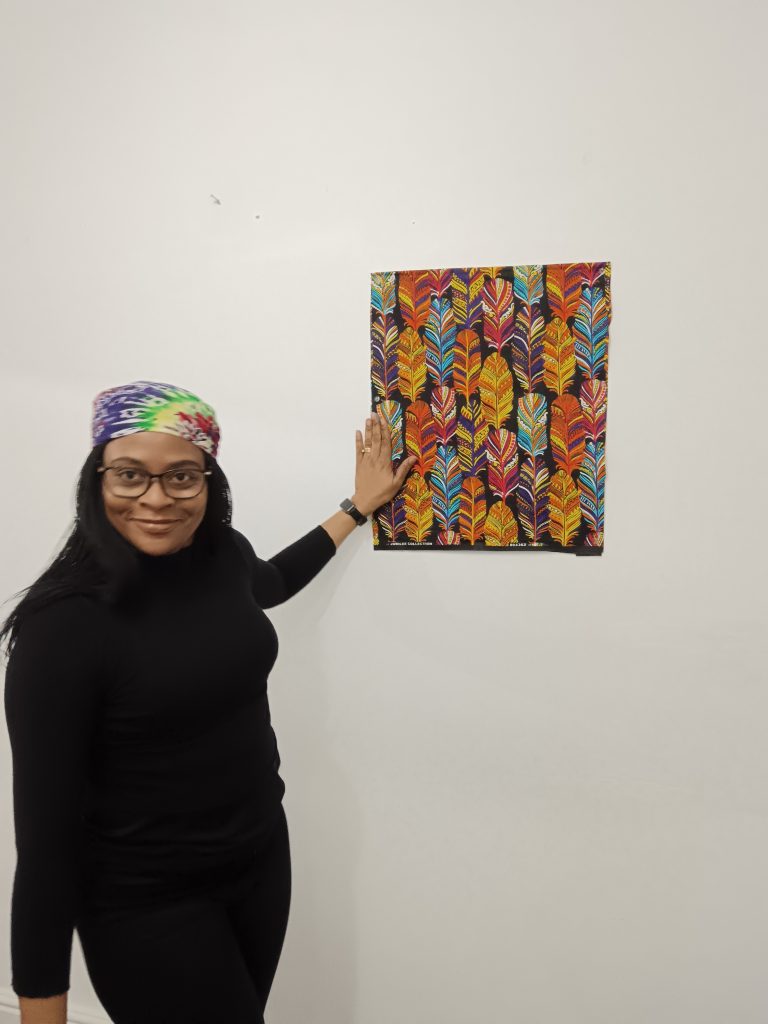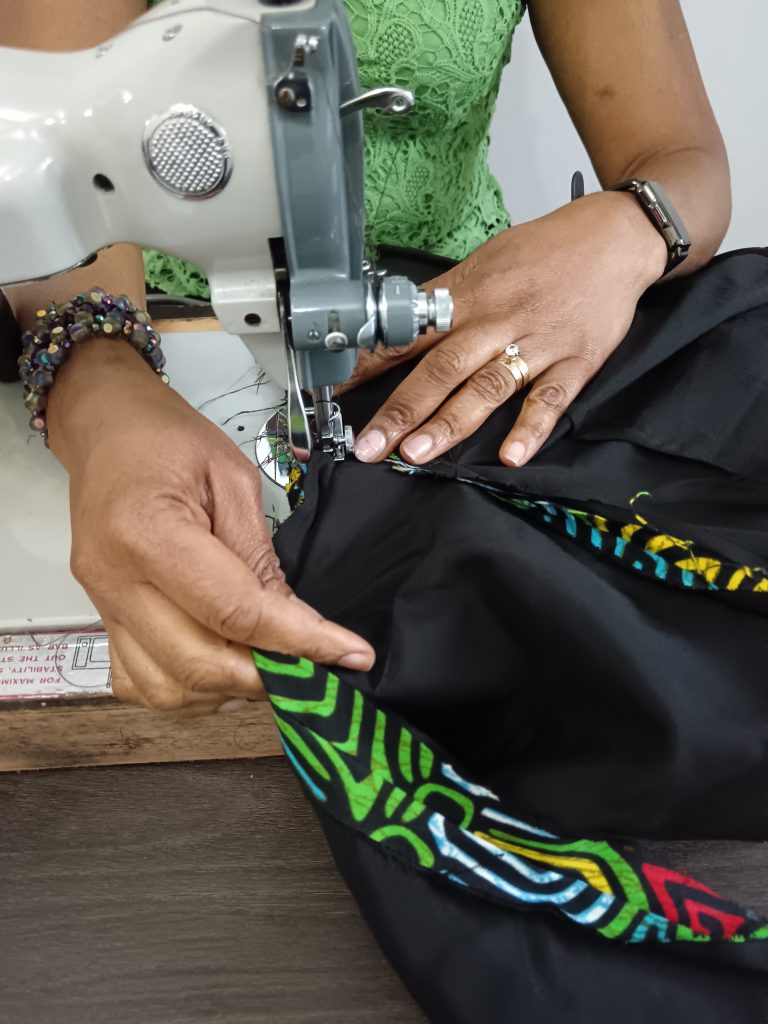
She worked on the floor.
Not at a table. Not in a studio. On the floor of a compound in Nigeria, with fabric spread out around her like a second skin.
I watched her from the time I was small enough to sit beside her without being in the way. She would lay the cloth flat, look at it for what seemed like ages, and then begin cutting patterns from memory, without a template, without a measuring tape, relying only on her eyes, her hands, and what felt like a silent conversation with the fabric itself.
She never called herself a designer. She would have found the title faintly amusing. She was simply a woman who knew what fabric was for.
I have been thinking about her a great deal recently. Because the more I build Ann-Aniedi Asikpo Studio, the more clearly I see that everything I am working toward, she was already practising.
What she understood that the fashion industry is only now discovering.
She understood that fabric is not a raw material to be consumed. It is a resource to be respected.
Every cut she made was intentional. She knew where the pattern would fall on the seam. She knew how much the cloth would yield. She knew which direction the print needed to run so the garment would honour the fabric rather than diminish it.
When a piece of Ankara grew thin at the elbows or faded at the hem, it did not become rubbish. It became something smaller, a headwrap, a pocket, an insert in a child’s dress. And when it could give no more as clothing, it became something else entirely.
This is what the global fashion industry is currently spending enormous sums of money trying to discover. They call it the circular economy. They call it longevity design. They call it the Craft of Use.
She called it Tuesday.
The language she spoke without words.
What struck me most, watching her work, was the silence.
There was no explaining. No narrating. She simply worked. And I watched.
But the knowledge was there in every choice she made, in the way she handled the cloth, in the occasions she chose specific fabrics for. The Ankara she wore to church was different from the Ankara she wore to market. The fabric she chose for a celebration was different from the fabric she wore in grief.
She was speaking a visual language fluently. And I absorbed it without knowing I was learning.
What I am building in her image,
Ann-Aniedi Asikpo Studio exists, in part, because I watched that woman and understood much later that what she was doing was not just making clothes.
She was maintaining a cultural communication system. Preserving a knowledge tradition. Practising every principle that the global sustainability movement is now trying to systematise and sell.
The difference is that for her, it was never a principle. It was just how you treated something that mattered.
Every garment I make is cut the way she taught me: with the pattern considered before the scissors touch the cloth, with the intention that it will be worn many times, on many occasions, by someone who knows what it is saying.
Not because it is a sustainability strategy. Because that is how you treat something that carries meaning.
#DecodeAfrica #weaveyourstory #AfricanTextiles #Ankara #CraftOfUse #HeritageTextiles
Ann-Aniedi Asikpo